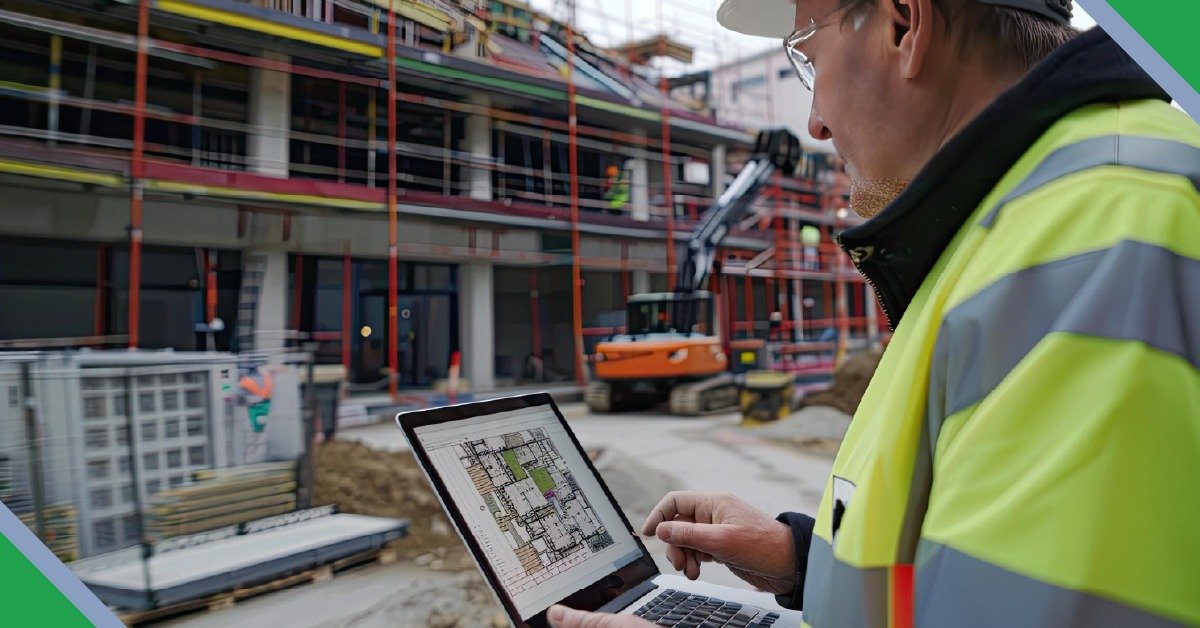

Large site projects such as industrial parks, townships, infrastructure corridors, and utility networks demand far more than isolated CAD drawings. These projects span vast areas, involve multiple stakeholders, and require precise coordination between planning, design, and execution teams.
This is where GIS and mapping data significantly enhance the value of CAD deliverables. By integrating geospatial intelligence with CAD drafting, project teams gain better accuracy, context, and decision-making capability—especially critical in large, multi-phase developments.
Why CAD Alone Is Not Enough for Large Site Projects
Traditional CAD drawings are effective for detailing individual components, but they often lack the broader spatial context required for large-scale projects.
Common limitations include:
- No real-world geographic reference
- Difficulty managing large extents and multiple zones
- Limited integration with survey, utility, and environmental data
- Challenges in coordinating across disciplines and phases
For large sites, CAD must be supported by accurate geospatial data to remain reliable and scalable.
What GIS and Mapping Data Bring to CAD Deliverables
Geographic Information Systems (GIS) provide spatial intelligence that transforms static CAD drawings into context-aware design assets.
GIS and mapping data add value by:
- Providing accurate georeferencing
- Aligning CAD drawings with real-world coordinates
- Integrating survey, terrain, and utility data
- Supporting phased development and future expansion
To understand the core capabilities of GIS-based mapping services in detail, explore: GIS Systems and Mapping Services.
How GIS-Integrated CAD Improves Accuracy and Coordination
Improved Site Planning and Layout Accuracy
GIS ensures that CAD site layouts are aligned with actual land boundaries, contours, and infrastructure constraints, reducing layout conflicts during execution.
Better Utility and Infrastructure Coordination
Mapping existing utilities and infrastructure within GIS allows CAD drawings to reflect underground and surface-level realities, minimizing clashes and redesign.
Seamless Multi-Discipline Collaboration
Architectural, civil, electrical, and utility teams can work from a unified spatial reference, improving coordination across large project footprints.
Key CAD Deliverables Enhanced by GIS Integration
When GIS and CAD workflows are combined, the following deliverables gain significant accuracy and usability:
- Large-scale site layout plans
- Road and corridor alignment drawings
- Utility network layouts
- Grading and drainage plans
- Phasing and zoning drawings
These deliverables are essential for approvals, execution, and long-term asset management.
Industries That Benefit from GIS-Enhanced CAD Deliverables
GIS-integrated CAD workflows are especially valuable for industries that manage large, complex sites and infrastructure networks.
DigitiseIT supports GIS-driven CAD deliverables across multiple industries, including:
- Infrastructure and transportation projects
- Industrial and manufacturing facilities
- Townships and large residential developments
- Utilities and energy networks
- Smart cities and urban development initiatives
Explore how GIS solutions are applied across industries here: GIS Solutions Across Industries.
Use Cases: GIS and CAD in Large Site Projects
Industrial Parks and SEZs
GIS-integrated CAD supports zoning, internal road planning, utility routing, and future expansion planning.
Infrastructure Corridors
Linear projects such as highways, pipelines, and rail corridors rely on GIS data to manage long alignments, land parcels, and environmental constraints.
Townships and Mixed-Use Developments
Large residential and mixed-use developments benefit from coordinated site planning, phased construction, and long-term asset documentation.
Reducing Risk and Rework Through GIS-Based CAD Workflows
By embedding spatial intelligence into CAD deliverables, project teams can:
- Reduce site conflicts and redesign
- Improve approval success rates
- Enhance construction sequencing
- Support future upgrades and expansion
This approach directly impacts cost control, timelines, and execution efficiency.
Conclusion
For large site projects, accurate CAD drawings must go beyond isolated design details. Integrating GIS and mapping data into CAD deliverables ensures that designs are context-aware, scalable, and aligned with real-world conditions.
By combining geospatial intelligence with precise CAD drafting, project stakeholders gain better control over planning, execution, and long-term asset performance—making GIS-enhanced CAD a strategic necessity rather than an optional add-on.